REVIEW · HOBART
Tasman Peninsula Full-Day Sea Kayak Excursion
Book on GetYourGuide →Operated by Roaring 40s Kayaking · Bookable on GetYourGuide
Sea cliffs, seals, and sea caves—without the crowds. This full-day trip is built for a relaxed paddle beneath 200-meter-high cliffs and past the Totem Pole, with wildlife spotting and a proper lunch included. I love the small-group setup and the way the guides help you read the coast as you go, not just snap photos. One consideration: you need moderate fitness for up to about 5 hours on the water, and it’s not for people over 120 kg.
The day runs long, but the pacing is sensible: short breaks for photos and snacks, plus time to explore key rock features like Cape Hauy and the Candlestick as you head toward Totem Pole. You’ll also stop at a semi-submerged shipwreck and then paddle back along the coastline at a calmer rhythm.
In This Review
- Key highlights you’ll remember
- A sea-kayak day on the Tasman Peninsula: what you’re really doing
- Getting from Hobart to Fortescue Bay without travel stress
- Launching into Fortescue Bay and paddling beneath 200-meter cliffs
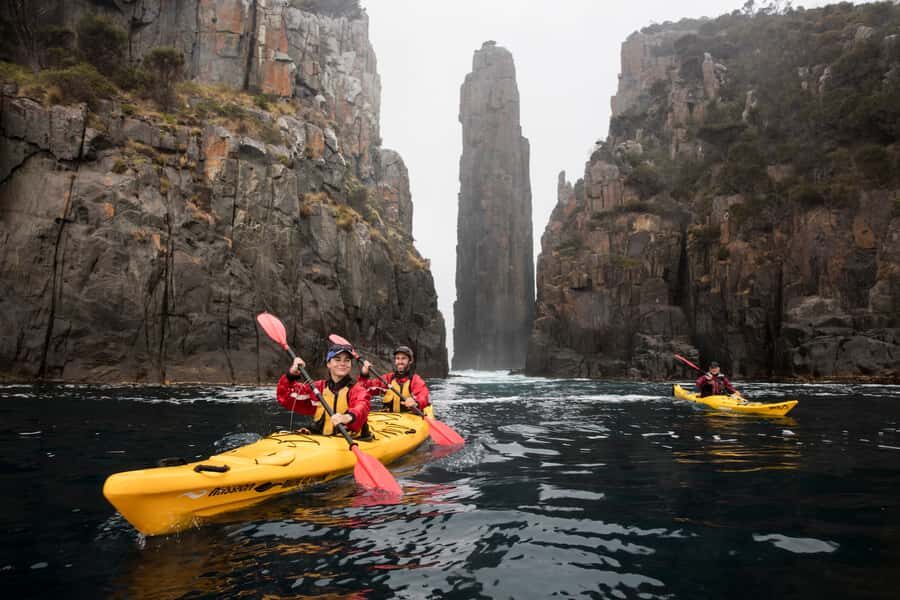
- Cape Hauy, the Candlestick, and the Totem Pole moment
- Wildlife time: fur seals, dolphins, sea eagles, penguins, and maybe whales
- The semi-submerged shipwreck stop: a pause that changes the mood
- Lunch at a secluded bay: local food, real recovery time
- Gear, comfort, and what to bring (so you enjoy every hour)
- Price and value: why $212 can make sense for a 10-hour day
- Logistics that affect your day: timing, group size, and weight limit
- Who should book this sea kayaking excursion (and who shouldn’t)
- Should you book the Tasman Peninsula full-day sea kayak?
- FAQ
- Where is the meeting point?
- How long is the excursion?
- Is hotel pickup included?
- What level of fitness do I need?
- How big is the group?
- Is there a weight limit?
- What should I bring?
Key highlights you’ll remember
- Totem Pole rock formation and other famous features like the Candlestick and Cape Hauy
- Paddling beneath huge sea cliffs around Fortescue Bay in Tasman National Park
- Wildlife spotting focus, especially Australian fur seals on the rocks
- Shipwreck stop along the way, with time to pause and look
- Lunch with local products at a secluded bay, plus refreshments
- Small group limit (12) with stable double sea kayaks and quality gear
A sea-kayak day on the Tasman Peninsula: what you’re really doing
This is a classic Tasman Peninsula experience, but with one big difference: you’re not driving past the scenery. You’re moving through it slowly from a stable double sea kayak, so the coastline shapes how you see everything.
You’ll spend the day paddling toward big rock landmarks and quiet coves, under steep cliff walls that can feel almost cathedral-like when you’re down on the waterline. And because the coast is very alive with birds and marine life, it works as both an active day and a wildlife day.
The “full-day” part matters too. This is long enough that you get the full sequence: the morning drive, the main paddle out, the pauses and wildlife watching, lunch ashore, then the paddle back. It’s the kind of tour where you finish tired in a good way.
More Tasman Peninsula in Hobart & Tasmania
Getting from Hobart to Fortescue Bay without travel stress
You start with a 2-hour drive from Hobart in a comfortable air-conditioned minivan. That’s a big deal because it sets the tone for the day. Instead of you juggling directions, parking, and timing, you arrive ready to gear up.
The meeting point is Cambridge Park near the Anaconda Building. There’s no mention of hotel pickup, so plan to get yourself there on time. Once you’re in the minivan, you can just relax and look out at the roads as you head toward the Tasman National Park area.
When you’re going to be on the water for up to around 5 hours, you want your body to start the day fresh. That’s why I like that the transportation is included and straightforward: you’re not starting the kayaking portion half-asleep.
Launching into Fortescue Bay and paddling beneath 200-meter cliffs
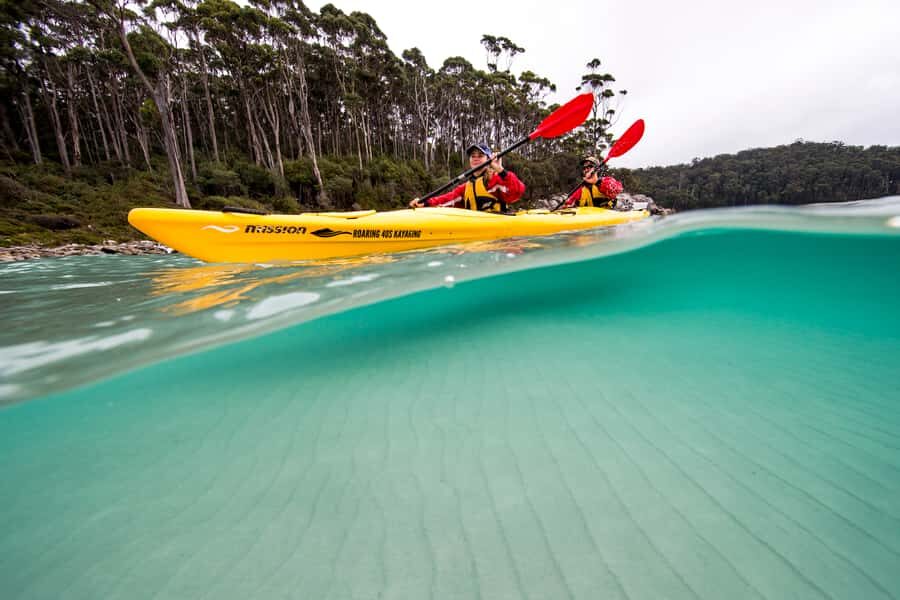
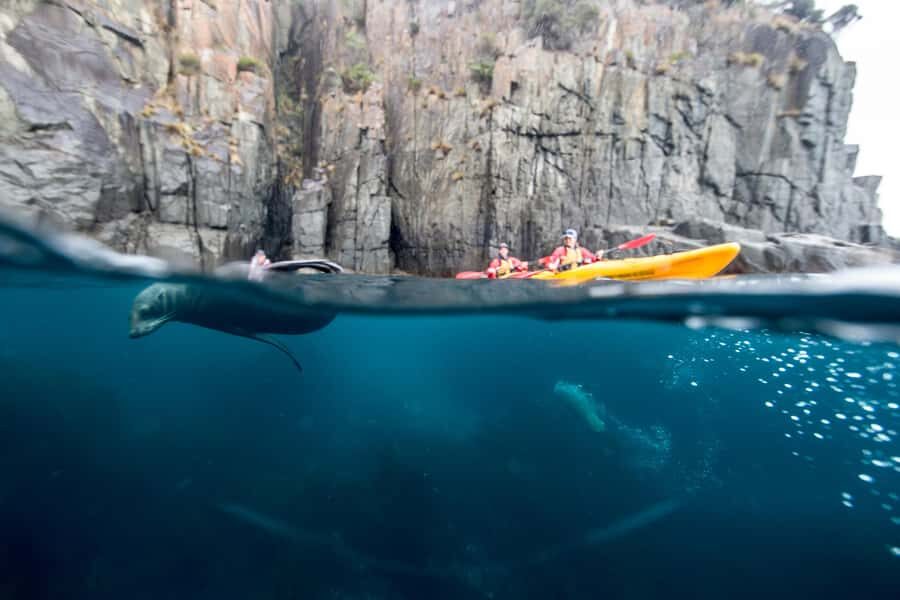
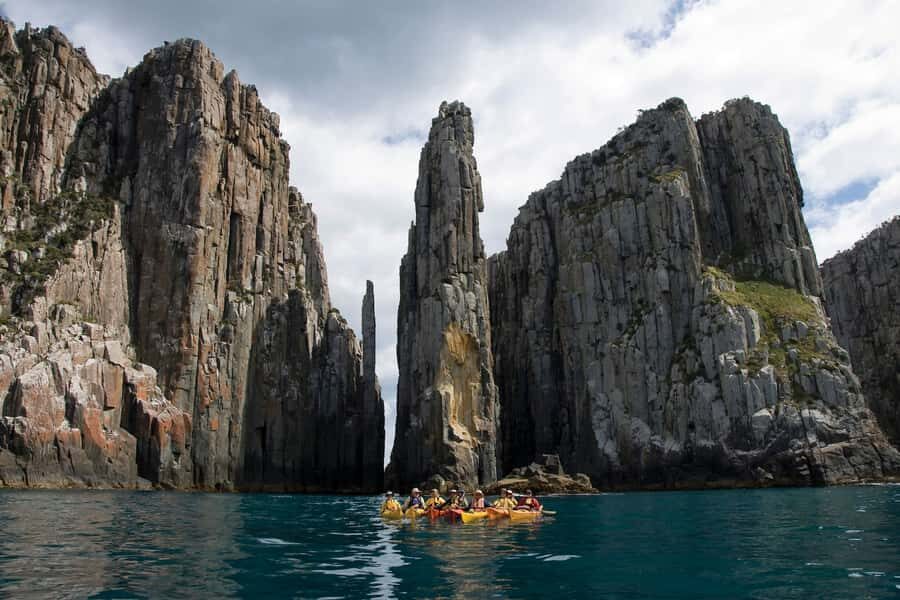
Your sea kayaking begins around Fortescue Bay, in the heart of Tasman National Park. From the moment you’re on the water, the scale changes. Those steep walls are listed at 200 meters high, and from a kayak they feel even more vertical because you’re close to the rock face.
This is where the guided approach really pays off. You’re not just out “for a paddle.” The guides talk about natural history and wildlife, and they help you time your attention. When something moves near the rocks or overhead, you’re ready to look.
The pace stays relaxed, with stops for photos and snacks. That matters for first-timers, and it also keeps the day enjoyable if you’re not a training-athlete paddler. You’ll likely spend a good chunk of the morning and early afternoon working through the key sections of coastline.
Cape Hauy, the Candlestick, and the Totem Pole moment
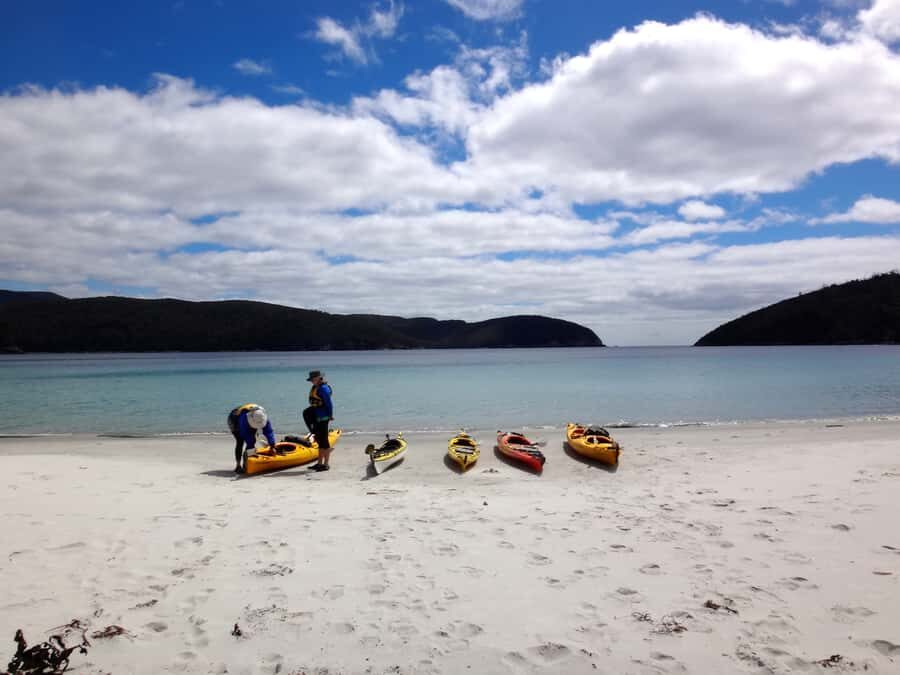
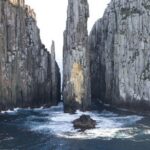
One of the best parts of this trip is that it names the rocks you’re actually going toward. The route includes Cape Hauy, the Candlestick, and the world-famous Totem Pole. That turns your day into something more satisfying than random scenery.
Here’s the practical value: when the guide points out a formation, you learn what to look for. Later, when you see a similar rock elsewhere, you can spot the difference. That’s how you go from seeing coastline to understanding coastline.
The Totem Pole is the headline for a reason. It’s memorable because it’s distinctive, and because you experience it from the waterline, not from a viewpoint several minutes away on foot. The Candlestick is another standout that helps break up the paddle into meaningful chunks.
If you’re the kind of person who likes “I know what I’m looking at” moments, this route hits that sweet spot.
Wildlife time: fur seals, dolphins, sea eagles, penguins, and maybe whales
Wildlife is a major focus here, and the plan is simple: look for what the coast is offering that day.
You’ll be on the lookout for Australian fur seals, especially those sunning themselves on the rocks. This kind of wildlife spotting is more than luck if you pay attention to the guide’s cues. The guides help you watch safely and at the right distances.
Other wildlife that you might see includes dolphins, sea eagles, penguins, and if conditions are kind, whales. You shouldn’t count on whales on every outing, but it’s clear the team is scouting for them.
One review note that’s useful: if you’re new to kayaking, consider motion-sickness prevention. One guest even suggested bringing an antiemetic before the tour. I can’t tell you what’s right for your body, but if you’re prone to seasickness, plan ahead.
More kayak in Hobart & Tasmania
The semi-submerged shipwreck stop: a pause that changes the mood
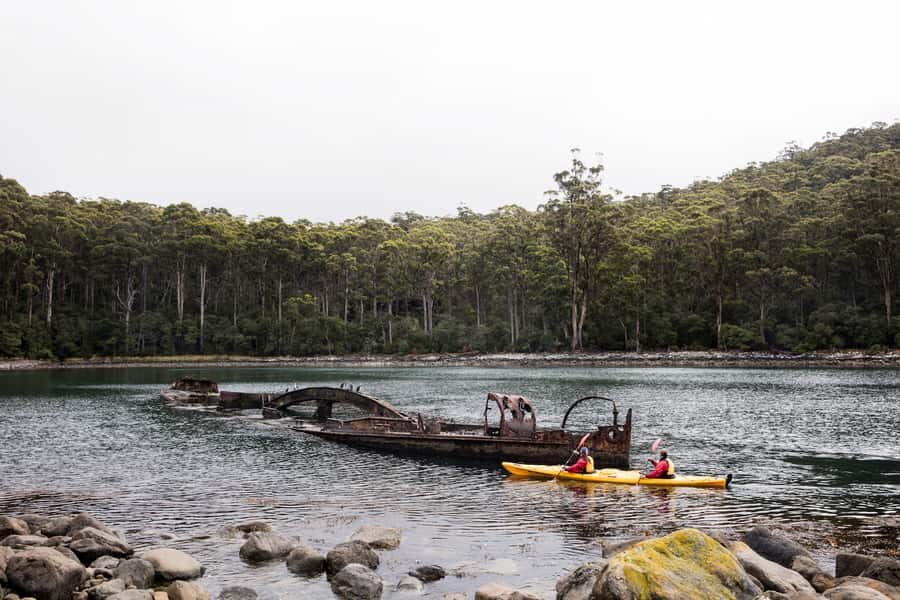
About partway through, you’ll stop at a semi-submerged shipwreck. This is one of those moments that turns the day from “nature sightseeing” into a story with human history layered on top.
The key here is the pause. You don’t just skim past and keep going. You have time to look and take in the wreck’s position and shape relative to the surrounding water and rock.
Even if you’re not a history person, this stop works because it’s visual and because it gives your arms a brief break before the paddle back.
Lunch at a secluded bay: local food, real recovery time
Lunch is not an afterthought. You’ll have a picnic-style break with fresh local products at a secluded bay. That’s important because the day is long and you’re using muscle groups you might not use every week.
This is also when you can reset. You’ll be able to get out of the kayak, eat, and drink, then re-focus for the next stretch. Reviews strongly point to the food being a highlight, with guests noting it was tasty and plentiful.
You’ll also get refreshments during the outing, which is the difference between feeling cheerful at midday versus “why didn’t I bring more water” later in the day.
Gear, comfort, and what to bring (so you enjoy every hour)
The tour includes stable double sea kayaks and quality paddling equipment. You don’t need to bring your own kayak gear, which is a real value, because it’s expensive and annoying to source locally.
A nice detail from a guest review: they even provide items like aquashoes, plus support if you forget sunscreen. That doesn’t mean you should rely on it, but it does tell you the operation thinks about comfort.
Still, pack what you know you’ll need. Bring:
- Sunglasses
- Sun hat
- Change of clothes
- Sunscreen
- Water
- Comfortable clothes
For comfort, I’d plan for the possibility that you get a bit damp. Changing clothes is one of those “trust me” items. It helps you enjoy the ride home instead of feeling sticky and cold.
On the water, you should have a moderate fitness level for up to about 5 hours of sea kayaking. The pace is relaxed, and there are breaks, but you should be ready to paddle consistently enough to keep moving with the group.
Price and value: why $212 can make sense for a 10-hour day
At $212 per person for a 10-hour outing, you’re paying for more than just access to water.
Here’s what your money covers:
- Expert guides
- Round-trip transportation from Hobart
- Lunch and refreshments
- National Park fees
- Stable double sea kayaks
- Quality paddling equipment
The value is in the full package. If you tried to piece this together yourself, you’d still need transportation, guide expertise, safe equipment, park access, and a plan for food. This trip removes all of that friction.
Also, the small group limit of 12 matters. With fewer people, the guides can run a tighter safety and coaching setup, and you’re more likely to get personal help if it’s your first kayak outing.
Logistics that affect your day: timing, group size, and weight limit
Timing matters because the day is built around the paddle window. It’s listed as a 10-hour experience, so check starting times for availability. The group runs with a limit of 12 participants, which is ideal if you want a guided feel without feeling stuck in a big bus group.
There’s also a clear weight limit: it’s not suitable for people over 120 kg (264 lbs). That’s the kind of detail worth respecting, because kayak fit and safety are not negotiable.
If you don’t want surprises, show up prepared and ready to gear up. Since there’s no hotel pickup listed, be at the Cambridge Park meeting point near the Anaconda Building.
Who should book this sea kayaking excursion (and who shouldn’t)
This is a great match if you want:
- A guided day with a strong nature focus
- A real paddle under cliff walls, not a quick photo stop
- Wildlife spotting time, with fur seals as a top target
- Lunch included, with local products
- Small-group attention and stable gear
It’s also a smart choice if you’re comfortable paddling for a few hours. You don’t need to be a professional athlete, but you do need a moderate level of fitness.
Skip it (or choose another option) if you:
- Have trouble with sustained moderate physical effort
- Are over the weight limit
- Are sensitive to motion and don’t plan for it
If you’ve never kayaked before, it can still work well. One guest specifically described it as their first sea kayaking experience and said everything felt organized and professional.
Should you book the Tasman Peninsula full-day sea kayak?
If you’re excited by the idea of getting close to sea cliffs and landmark rocks like the Totem Pole, plus you want a day that blends paddling, wildlife watching, a wreck stop, and a good lunch, then yes—this is a booking-worthy outing.
You should book it if:
- You like guided days where you learn what you’re seeing
- You want stable double kayaks and quality equipment
- You value small-group pacing over rushing through stops
You might pause before booking if:
- You’re not confident with moderate fitness for several hours of paddling
- You’re prone to motion sickness and haven’t planned for it
FAQ
Where is the meeting point?
You’ll meet at Cambridge Park near the Anaconda Building.
How long is the excursion?
The experience runs for 10 hours.
Is hotel pickup included?
No, hotel pickup is not included.
What level of fitness do I need?
You need a moderate fitness level. The plan includes up to about 5 hours of sea kayaking, with a relaxed pace and breaks for photos and snacks.
How big is the group?
The group is small, limited to 12 participants.
Is there a weight limit?
Yes. It is not suitable for people over 264 lbs (120 kg).
What should I bring?
Bring sunglasses, a sun hat, change of clothes, sunscreen, water, and comfortable clothes.