REVIEW · HOBART
Hobart: Mt. Field, Mt Wellington & Wildlife – Active Day Tour
Book on Viator →Operated by Tours Tasmania · Bookable on Viator
Some days in Hobart feel too big for one clock. This active day tour stacks Mt Field waterfalls and giant trees, Bonorong wildlife, and the Mt Wellington summit views into one efficient route, with a guide who helps you spot what you’re looking at and why it matters. You get short walks, animal encounters, and big panoramas without needing to rent a car or drive the hairpins yourself.
I especially like how Mt Field breaks the park into bite-size hikes, so you can enjoy Russell Falls and the Tall Trees Track without a long, punishing trek. I also love the stop at Bonorong Wildlife Sanctuary, where you spend dedicated time with native animals, including Tasmanian devils, plus other species that may include kangaroos, wombats, and more depending on what’s active that day.
The main drawback to consider is the day’s pace. It’s an 11-hour outing on paper, and even with breaks, some parts can feel time-tight—especially if you want to linger at viewpoints. Add in the fact that weather and road conditions can change what you do in the park, and you’ll want to be flexible.
In This Review
- Quick hits before you go
- Why this Hobart day trip works so well
- Mt Field National Park: Russell Falls and the Tall Trees Track
- What you should know about walking here
- The waterfall circuit timing (and why it can feel quick)
- Bonorong Wildlife Sanctuary: Tasmanian devils, kangaroos, and more
- Feeding and what to expect
- Mt Wellington (Kunanyi): how to make summit time count
- Clear day tip
- Price and logistics: is $132.69 good value?
- What to pack for an active day in Tasmania
- Your guide experience: the names that came up
- Who this tour suits best
- The bottom line: should you book this Mt Field–Bonorong–Mt Wellington tour?
- FAQ
- What time does the tour start, and how long does it last?
- Do they pick you up from your hotel?
- Is the Mt Field and wildlife day trip suitable for children?
- How much walking is involved?
- Is lunch included?
- Can I bring large luggage?
Quick hits before you go
- Small-group format (up to 20 travelers): easier for questions and a calmer rhythm on walks and photo stops.
- Mt Field’s short trails: Russell Falls plus the Tall Trees area, with manageable distances and lots to look at.
- Bonorong’s focus on native wildlife: Tasmanian devils are a key highlight, with an informative wildlife experience included.
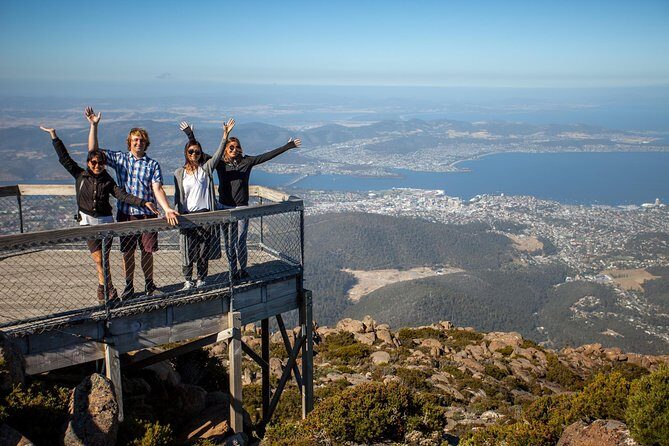
- Kunanyi/Mt Wellington summit time: a dedicated hour to take in views over Hobart and southern Tasmania on a clear day.
- Hotel pickup in central areas: pickup typically happens between 7:00 and 7:30 AM (from hotels/hostels, not Airbnbs).
Why this Hobart day trip works so well
If you only have a short stay in Hobart, you face a common problem: the best nature spots are spread out. This tour solves that by bundling three different kinds of Tasmania in one loop—rainforest waterfalls, wildlife encounters, and mountain views.
The structure is smart. You start with Mt Field National Park while the day is still cool, do multiple walk stops close together, then shift to Bonorong Wildlife Sanctuary for hands-on wildlife time, and finish at Mt Wellington (Kunanyi) when visibility has a better chance of being good. Guides also add context as you go, so the day doesn’t feel like a checklist.
Group size matters here. With a max of 20 people, it’s easier to keep moving without feeling rushed in the same way a big coach day trip can. In the reviews, multiple guides were praised for helping the group stay on track and for giving stories that made the scenery feel more real.
More Mount Wellington and Kunanyi in Hobart & Tasmania

Mt Field National Park: Russell Falls and the Tall Trees Track
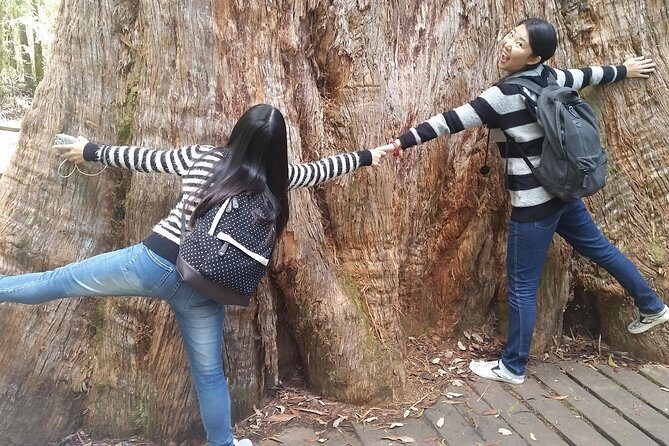
Mt Field is Tasmania’s old-growth country—cool, wet forest, and lots of green that feels alive even when the weather is gray. This tour focuses on some of the park’s most recognizable walk areas, spread across a few short stops so you don’t have to guess which track is worth your time.
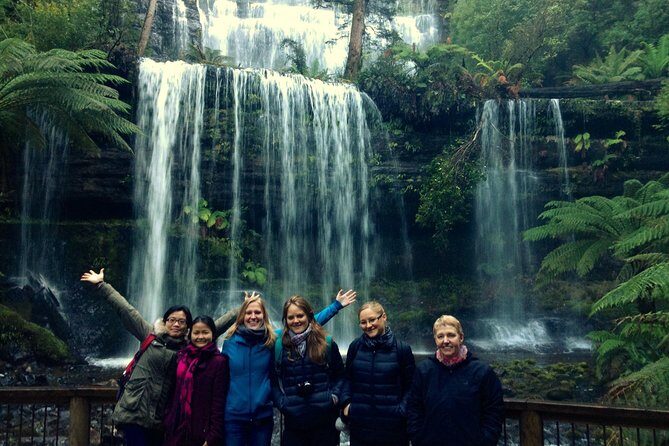
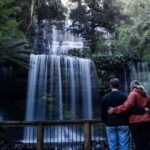
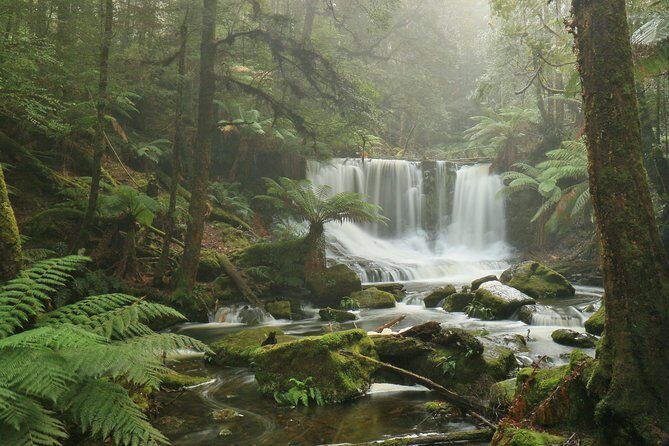
You’ll first get into the rhythm at Russell Falls, one of Tasmania’s best-known waterfalls. The walk is described as easy and enjoyable, with a forest track that moves through mixed forest and temperate rainforest. Expect a well-marked, friendly pace rather than a technical hike.
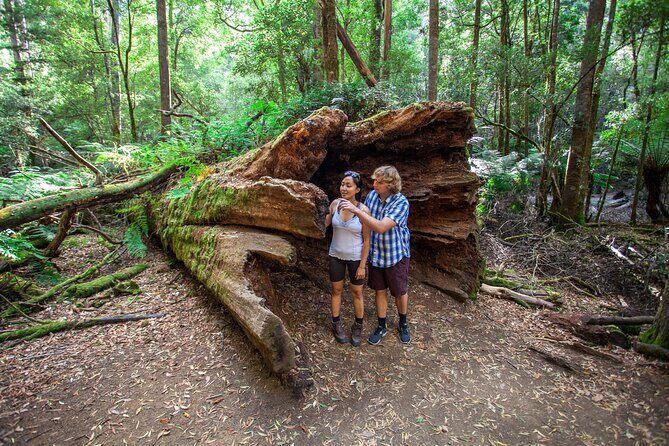
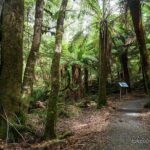
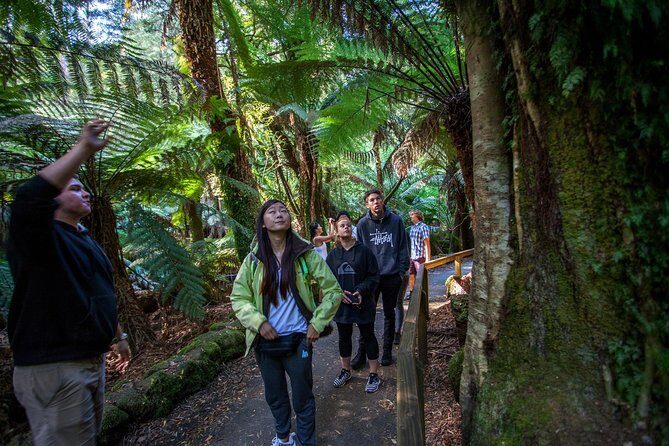
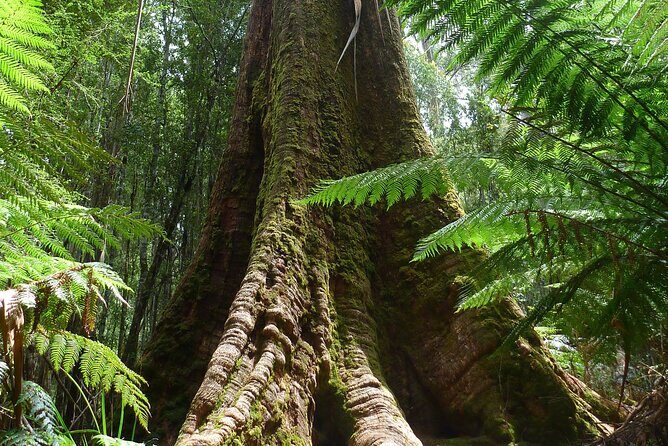
Next comes the Tall Trees Track. This is where the park makes a strong impression. The idea isn’t just to see tall trees—it’s to walk among them. You’ll follow a short circuit (about 30 minutes) around giant Swamp Gums, reportedly around 80 meters tall. Even if you’re not a “tree person,” this stop lands because you can feel the scale.
Then you continue toward Lady Barron Falls as part of the Three Falls Circuit area. This segment still stays in the realm of short, walkable time, but it’s designed to keep you in the rainforest environment and keep the waterfall theme going without repeating the same route twice.
What you should know about walking here
Even when hikes are short, Mt Field can include steps and some uneven areas. One review mentioned wooden manmade stairs on the route, and another noted the tour includes steps if you choose longer options. The good news is that the guide can steer you toward the right effort level when you’re on the ground.
Your best move: wear real walking shoes, not just sneakers you love. Bring a rain layer because rainforest weather is unpredictable, and staying dry makes the whole day more enjoyable.
The waterfall circuit timing (and why it can feel quick)
The Mt Field portion includes multiple stops—so it naturally has a “series” feel. You’ll spend time at Russell Falls, then continue through the Tall Trees Track area and onward toward the Lady Barron Falls segment. There’s also lunch time built into the day in a scenic location within the park.
Here’s the practical bit: although the overall tour runs about 11 hours, reviews suggest some days feel closer to 9 hours depending on pacing and conditions. That’s not necessarily bad—just be mentally prepared that you’ll be moving between highlights throughout the morning and early afternoon.
In other words, this isn’t a slow wandering day where you can linger for an extra hour every time you find a perfect viewpoint. If you want to take your time, you’ll still get chances to pause, but you’ll need to accept a steady flow.
Bonorong Wildlife Sanctuary: Tasmanian devils, kangaroos, and more
After the rainforest and waterfalls, the day changes tone fast. Bonorong Wildlife Sanctuary is where Tasmania’s animals move from background to main event.
You get an included wildlife experience (about an hour), led by staff who share information while you meet native animals. Tasmanian devils are a key highlight, and the tour also lists kangaroos and wombats as part of what you can encounter.
What I like about this stop is that it’s not treated like a quick photo stop. An hour is enough time to actually see animals, learn a bit about how they live, and understand the park’s approach to keeping disturbance low by viewing from appropriate distances.
Based on the animal variety noted in reviews, you might also encounter additional species while you’re there—such as echidnas, koalas, and tawny frogmouths. That’s a nice bonus, but the reliable headline is the devils and the chance to see multiple Australian species in one place.
More Mt Field and Russell Falls in Hobart & Tasmania
Feeding and what to expect
One review specifically mentioned feeding wallabies, and others noted kangaroo feeding. The tour data doesn’t promise a specific feeding program, so treat that as a possible extra. Still, the sanctuary experience is designed to get you close enough to feel the animals are real, not just distant.
Tip for your visit: keep your expectations realistic. Wildlife doesn’t follow schedules. If an animal isn’t active, be patient and watch what your guide points out.
Mt Wellington (Kunanyi): how to make summit time count
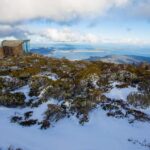
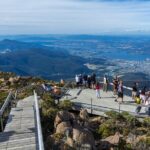
The final act is Mount Wellington (Kunanyi), the mountain that gives Hobart its dramatic backdrop. The summit sits at 1271 meters, and on a clear day the views across Southern Tasmania are the payoff you’ve been working toward all day.
You’ll have about one hour at the summit. In practice, the time can flex based on weather and what the guide sees on arrival—one review mentioned staying around 40 minutes when conditions were ideal and they made the most of it. Either way, this is your moment to slow down, breathe, and get your bearings fast.
Clear day tip
If you want the broadest views, watch the sky. If it’s foggy or windy at summit height, you may still see enough to enjoy it, but clarity is king. Layer up because mountain air can feel colder than the city.
Bring your phone camera plan, but don’t only chase photos. Standing still for 10 minutes in mountain wind can be the best way to truly take in what you’re seeing.
Price and logistics: is $132.69 good value?
At $132.69 per person (approx.), this isn’t a bargain in the way a free-walk local market might feel. But it’s strong value when you break down what’s included: national park fees, wildlife park entry, and professional guiding with interpretive walks.
You also get transportation built in—plus hotel pickup from most central city hotels and hostels. For many visitors, that alone is worth real money because self-driving the whole loop means hiring a car, managing parking, and spending extra time on unfamiliar roads.
The “missing piece” is that food and drinks are not included. The tour notes you can purchase a takeaway bakery-style lunch on tour. That means the price is mainly covering guiding, entry fees, and transit—not meals. If you’re trying to stick to a budget, plan your lunch spend ahead of time and consider bringing snacks for the walks.
Also pay attention to luggage rules: no luggage on board, only your day pack. So pack light.
What to pack for an active day in Tasmania
This tour isn’t described as a hardcore adventure, but it does include walking and some steps. Your goal is comfort over fashion.
I’d pack:
- Walking shoes with grip (water and boardwalks happen in rainforest zones)
- A rain jacket or light waterproof layer
- Sunscreen and a hat for Mt Wellington if the day turns bright
- A day pack only (no extra luggage)
- A refillable water bottle
- A small snack option in case you want something beyond the takeaway lunch
If you run warm easily, you can shed layers at Mt Field and keep comfortable during the short circuits. If you run cold easily, keep a warmer layer ready for the summit.
Your guide experience: the names that came up
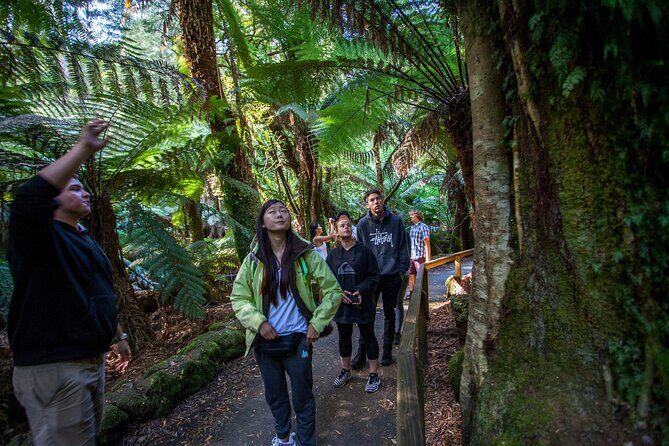
A big part of what people liked here wasn’t just the places—it was how the day was explained. Several guides were highlighted by name:
- Clinton got praise for being personable and for making stories and insights turn the day into something more than moving between stops.
- Lukas was described as helpful, polite, and full of information tied to Tasmania’s environment and history.
- Hannah stood out for making the day fun and for handling different walking levels with flexibility.
- Nick was frequently mentioned for being educational, friendly, and effective at guiding the group well.
- David, Peter, Ian, Ben, Jeremy, and Steve were also called out for expertise, organization, and a focus on caring for safety and pacing.
Even if your guide isn’t one of these names, the pattern matters: the best days are the ones where the guide keeps interpretation active and movement smooth without turning it into a race.
Who this tour suits best
This is a good fit if you want a “big day” without the stress of planning the route.
You’ll likely enjoy it if:
- You’re a first-timer in Hobart and want the classic natural highlights in one run
- You like short walks more than long hikes
- You want animal encounters that feel purposeful, not rushed
- You appreciate a guided explanation of Tasmania’s flora and fauna as you move between ecosystems
It might be less ideal if:
- You hate steps or prefer completely flat walking
- You want long, lingering time at each stop with zero time pressure
- You’re traveling with limited mobility and need fully barrier-free access (the tour emphasizes general health and fitness, not step-free routes)
The bottom line: should you book this Mt Field–Bonorong–Mt Wellington tour?
If you’re choosing a single day trip from Hobart and you want real variety—rainforest waterfalls, giant trees, Tasmanian wildlife, and summit views—this tour is a strong option. The price makes sense when you factor in park fees, wildlife entry, and guided interpretation, plus convenient pickup.
I’d book if you’re comfortable with short walks, steps, and a day that moves from one highlight to the next. I’d think twice if you want unlimited time at viewpoints or you’re sensitive to weather changes that can affect road access in the park.
FAQ
What time does the tour start, and how long does it last?
It starts at 7:30 AM and runs for about 11 hours.
Do they pick you up from your hotel?
Yes. Hotel pickup time is typically between 7:00 and 7:30 AM and is available from most central city hotels and hostels. Airbnbs are not included, so you need to arrange pickup through your hotel at least 48 hours before departure.
Is the Mt Field and wildlife day trip suitable for children?
The minimum age to participate is 8 years.
How much walking is involved?
A small amount of walking is involved, and the tour recommends a suitable level of general health and fitness. There can be steps, and you should be prepared for a moderate day on your feet.
Is lunch included?
Food and drinks are not included. The tour says there will be an opportunity to purchase a bakery-style takeaway lunch on tour.
Can I bring large luggage?
No. The tour notes there is no luggage on board, only a day pack.