REVIEW · HOBART
Hobart Shore Excursion: Hobart Attractions Bus
Book on Viator →Operated by eGuide · Bookable on Viator
This Hobart bus tour is a smart fix for limited time. In about 90 minutes you get guided stops with historical context and those big Mount Nelson Signal Station views that help you understand where everything sits.
I like that it is not a random hop-on ride. It runs a set route with planned stops, so you can relax and take in the streets, buildings, and viewpoints without constantly re-checking schedules.
One thing to consider: the whole experience is short, so you are not doing long walks or lingering all day. If you like to slow-travel for hours at each stop, this one may feel a bit quick.
In This Review
- Key things to know before you board
- Why a planned Hobart bus tour works for cruise days
- Mount Nelson Signal Station: views plus a 1811 communication story
- Battery Point: colonial architecture without the full-day commitment
- Cascade Brewery stop: Australia’s oldest operating brewery (1824)
- Hobart Penitentiary Chapel: 1830s convict-era details that hit hard
- Royal Tasmania Botanic Gardens: what you see from the coach
- What the 90 minutes feel like on the ground
- Price and value: is $57.38 worth it?
- Who should book this Hobart Attractions Bus
- Should you book the Hobart Attractions Bus?
- FAQ
- How long is the Hobart Attractions Bus tour?
- Where do I meet the tour and where do I redeem the ticket?
- What are the main stops on the tour?
- Is there an admission fee for Mount Nelson Signal Station?
- How many people are on the tour?
- Can I cancel and get a full refund?
- Are service animals allowed?
Key things to know before you board

- Mount Nelson Signal Station (1811): panoramic city views with a clear story behind the site.
- Battery Point colonial streets: a compact area where the past is still visible.
- Cascade Brewery (1824): a stop tied to Australia’s oldest operating brewery.
- Hobart Penitentiary Chapel (1830s): original cells, gallows, and courtrooms—sobering and real.
- Planned stops, not hop-on hop-off: a set itinerary that fits cruise timing better.
- Small group limit (30): easier listening and more room to hear the guide.
Why a planned Hobart bus tour works for cruise days
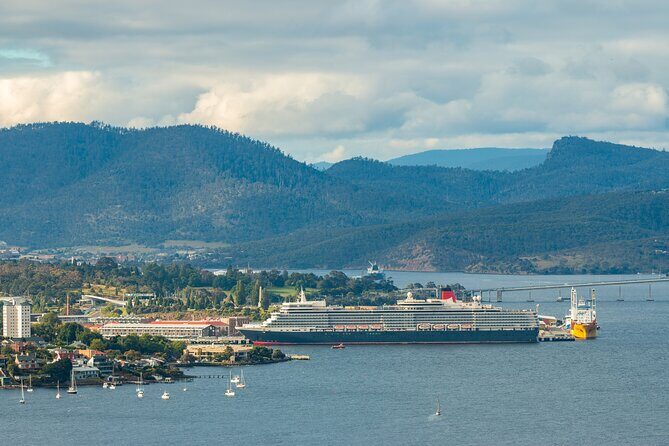
Hobart can be walkable, but it is also spread out. When you only have a short window off a cruise ship, you need time-management, not just transportation.
This tour is built around that reality. You get a modern coach, plus narration during the drive and at stops. The route also goes where you would want to be anyway: up to the signal station for orientation, into Battery Point for atmosphere, and toward the convict-era sites and brewing history.
The best value here is not that you hit lots of random stops. It is that the stops you do are chosen for meaning. You leave with a stronger sense of Hobart’s layout and what shaped it—Van Diemen’s Land, convict history, and early industry—without turning your day into a scavenger hunt.
More shore excursion in Hobart & Tasmania


Mount Nelson Signal Station: views plus a 1811 communication story
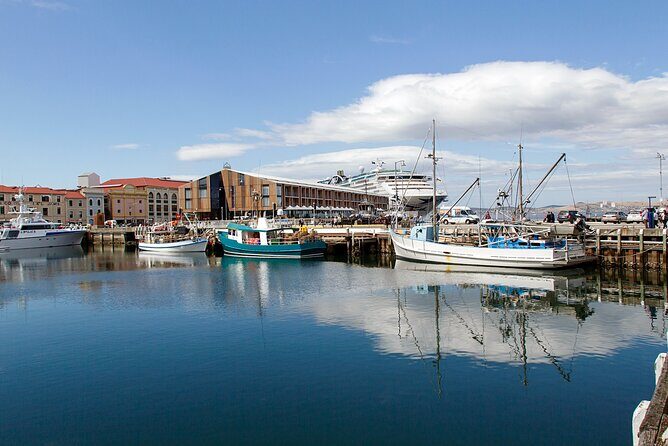
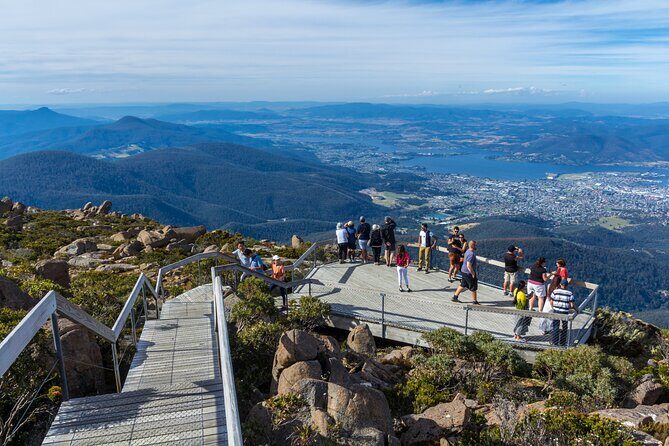
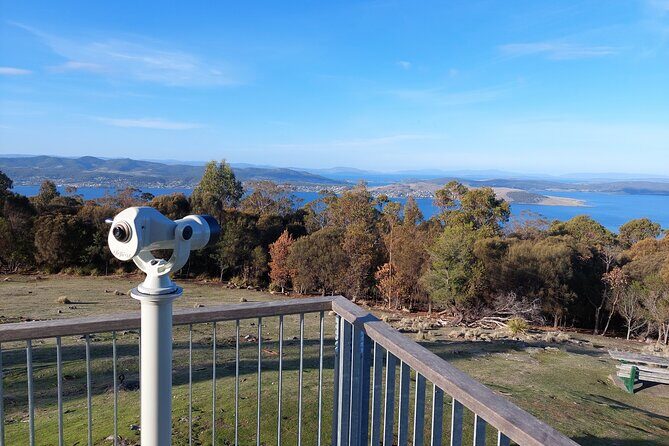
This is the first stop, and it is the one that helps the rest of the day click. The Mount Nelson Signal Station is a historic site established in 1811, originally used as a communications point. Today, it is a viewpoint where you can see Hobart and the surrounding area in one glance.
You get about 15 minutes here, and admission is listed as free for this stop. That is a good setup: you are not paying extra just to understand the geography. You can also use the time to orient yourself—where the water is, where the neighborhoods sit, and what direction you will be heading next.
Practical tip: at a lookout, photo time tends to expand. If you want a few clean shots and also want to hear the guide’s explanation, keep your camera ready and avoid long delays at the very front of the group.
Why it matters: that 1811 communication purpose turns the view from a pretty picture into a historical tool. The site was about sending messages; the hill position helped. Even if you know little about Hobart, the guide’s framing gives you a reason to look.
Battery Point: colonial architecture without the full-day commitment
After the viewpoint, the bus heads into Battery Point, one of Hobart’s most recognizable heritage neighborhoods. This area is known for well-preserved colonial architecture, which means the streets give you a sense of how the city looked when it was forming.
The stop is ideal if you want something human-scale. You are not walking across town; you are wandering through a compact neighborhood where you can slow down, look at façades, and connect it to what you heard about early settlement and the colony era.
Possible drawback: this is not a guided museum walk with one final destination. You are roaming at your pace within a small time window, so if you hate reading on-the-fly signage or you want a very structured experience, you may feel a little “on your own.”
My advice: walk one side of the street, then the other, just so you get variety in views. If you are traveling with kids, this is often the easiest segment to keep them interested because the streets and buildings are visual and immediate.
Cascade Brewery stop: Australia’s oldest operating brewery (1824)
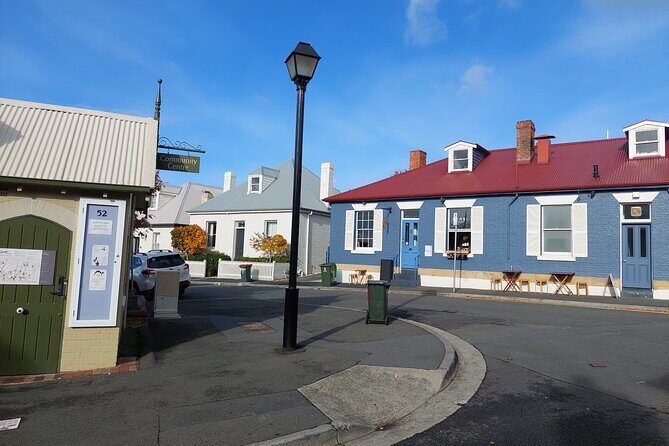
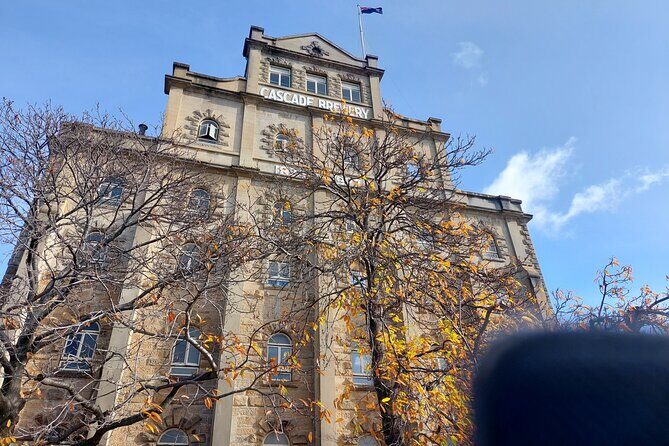
Next comes a change of pace—industry and everyday life, not just architecture and courts. The bus stops near Cascade Brewery, described as Australia’s oldest operating brewery, founded in 1824.
The point of this stop is not only the label. It is the idea of continuous working history. You get a chance to see brewing heritage in place—heritage buildings tied to how a city sustained itself. The tour framing also mentions traditional brewing methods, which helps the story feel practical rather than purely ceremonial.
What you should expect: a short visit and a chance to absorb the atmosphere. The tour data does not promise tastings or a formal brewery tour here, so it is smart to treat it as an informative stop with time to take photos and read the context around the site.
Value angle: for a day that is only 90 minutes, swapping one “big photo viewpoint” for a working-historical stop is smart. It adds texture. Hobart becomes more than a set of monuments; it becomes a place where people made things and kept routines going.
If you care about food and drink history, this is also a great pivot after the heavier convict-theme moments later on.
Hobart Penitentiary Chapel: 1830s convict-era details that hit hard

The final major stop is at the Hobart Penitentiary Chapel, built in the 1830s. This is the most emotionally heavy segment, because the site includes original cells, gallows, and courtrooms.
The payoff is that you are not getting generic “convict history” talk. You are seeing physical details tied to the system. That matters because it helps you understand what life was like, not just that punishment happened.
Why it is worth your time: the bus tour compresses multiple eras into a short schedule, and the chapel is the clearest link to the harsher side of early Tasmania (Van Diemen’s Land). It turns history into something concrete, even in a brief stop.
A balanced note: this is not a quick photo stop. If you are sensitive to dark history, plan for a quieter mindset here. If you are traveling with kids, this kind of stop can still work—especially if they are ready for serious topics and you are prepared to talk through what you see.
From the tour’s overall design, this stop also balances the day. After Battery Point and Cascade Brewery, the chapel brings the story back to cause-and-effect: how the colony functioned, who arrived, and how institutions shaped daily life.
More shore excursion in Hobart & Tasmania


Royal Tasmania Botanic Gardens: what you see from the coach
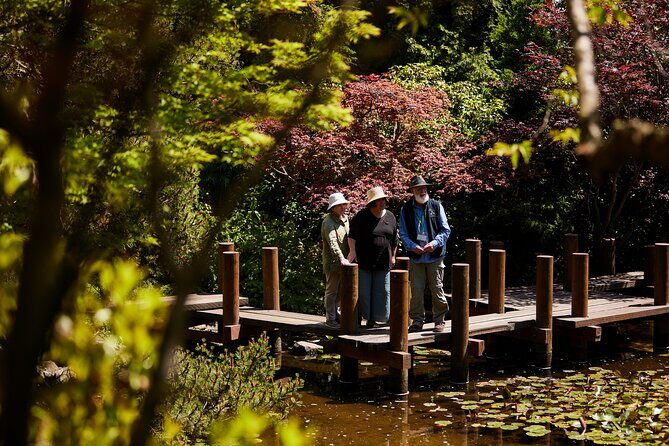
You also get a drive-by look at the Royal Tasmania Botanic Gardens. The tour data frames this as part of the route, meaning you likely see the gardens while moving through the area rather than doing a full on-foot visit.
Still, it is a useful inclusion. Seeing the gardens from the coach gives you another layer of Hobart’s identity—nature and city planning—so your day is not only stone and punishment and old industry. Even a brief visual helps you place the green spaces around the built areas.
If you want more time in the gardens, this bus tour is still a solid starting point for deciding what to do next with your own spare hours.
What the 90 minutes feel like on the ground
The tour runs about 1 hour 30 minutes (approx.). For a short, cruise-friendly excursion, that is a good pace: enough time to get out at key points, but not so long that your ship schedule becomes the main character.
The bus limit is up to 30 people, which is a real factor for how well you can hear the guide at stops. Smaller groups tend to make the narration easier to follow and keep the mood calmer.
Also, you are riding on a modern, comfortable coach, and the tour uses a planned itinerary with designated stops. That matters because it reduces uncertainty. With hop-on hop-off-style tours, you often end up timing your next move by guessing. Here, you are following a structure.
One more practical point: the tour is described as near public transportation, and it starts at a central pier-side meeting area. That makes it easier to connect with other parts of your day in Hobart.
Price and value: is $57.38 worth it?
At $57.38 per person, this is not a “grab a cheap bus and call it a day” option. But value is strong when you look at what you get for that time.
You are buying:
- transport by modern coach
- guided commentary during the drive and at stops
- a curated set of meaningful locations across history, neighborhoods, brewing heritage, and convict-era sites
- a schedule designed for cruise passengers, so you do not spend your limited time coordinating
The one extra detail that helps the value calculation: the Mount Nelson Signal Station stop lists free admission. That cuts down one of the common costs of short tours where you still pay to enter the best viewpoint.
Could you do these places on your own? Yes, likely. But if you are on a tight schedule, this tour removes the hassle. It also gives context so your photos turn into understanding.
For cruise travelers and first-time visitors, I think the cost makes sense. For locals or people with lots of free time and a car, it might feel pricier than you need.
Who should book this Hobart Attractions Bus
This excursion is a great fit if:
- you have limited time in Hobart, especially if you are on a cruise schedule
- you want a guided history thread rather than a list of random stops
- you like a mix of viewpoints and real places tied to Tasmania’s early era
- you want something that can work well with families, including kids who can handle serious history with your support
It may be less ideal if:
- you hate structured itineraries and prefer total freedom
- you want long museum-style stays where you can spend an hour or more inside one site
- you plan to go deep on one topic (like only convict history or only breweries)
Should you book the Hobart Attractions Bus?
If you are trying to make the most of a short port day, I would book this. The route gives you an efficient orientation up at Mount Nelson, a charming neighborhood stop in Battery Point, and two story-heavy sites that explain what shaped Tasmania. For 90 minutes, it is a solid way to come away with both pictures and context.
If your plan includes a car, you might recreate parts of the route. But most people with limited time will appreciate the stop timing, the narration, and the fact that you are not managing directions all day.
FAQ
How long is the Hobart Attractions Bus tour?
It runs for about 1 hour 30 minutes (approx.).
Where do I meet the tour and where do I redeem the ticket?
The meeting point is IXL Atrium, 27 Hunter St, Hobart TAS 7000, Australia. Ticket redemption is at Victoria Dock Bridge, Franklin Whrf, Hobart TAS 7000, Australia. The tour ends back at the meeting point.
What are the main stops on the tour?
The tour includes stops at Mount Nelson Lookout (Mount Nelson Signal Station), Battery Point, Cascade Brewery, and the Hobart Penitentiary Chapel. The bus also drives past the Royal Tasmania Botanic Gardens.
Is there an admission fee for Mount Nelson Signal Station?
The Mount Nelson Signal Station stop lists admission as free.
How many people are on the tour?
The maximum group size is 30 travelers.
Can I cancel and get a full refund?
Yes. You can cancel for a full refund if you cancel at least 24 hours before the experience’s start time.
Are service animals allowed?
Yes, service animals are allowed.