REVIEW · HOBART
5-Day Best of Tasmania Tour from Hobart
Book on Viator →Operated by Under Down Under Tours · Bookable on Viator
A fast loop through Tasmania’s wildest hits. I love how the tour bundles four nights accommodation and national park entry fees with guided transport, so you skip the planning headaches. I also like the mix of big, iconic nature stops and optional add-ons, from Dove Lake to Wineglass Bay. One thing to weigh: it’s an active, fast-paced trip, and hostel-style lodging can be pretty basic in places.
This tour is built for people who want to see a lot without renting a car. With a maximum of 24 travelers, you get a small-group feel, plus round-trip transfers from selected Hobart CBD locations and a 7:00am start from YHA Hobart Central.
Strong guide service is a theme in the feedback, with names like Tomi, Evan, Tim, Nat, and Jess showing up as standout leaders. If you like clear trail options, smart timing, and someone else driving while you focus on the views, this format makes a lot of sense.
In This Review
- Key takeaways before you go
- From Hobart at 7:00am: how the small-group loop really feels
- Russell Falls, Lake St Clair, and Franklin-Gordon: day one’s rainforest payoff
- Strahan, dunes, and a West Coast story: day two’s wild coasts
- Cradle Mountain–Lake St Clair: Dove Lake vs Marion’s Lookout
- Cataract Gorge, St Helens, and the Bay of Fires: the east-coast switch
- Freycinet National Park early: Wineglass Bay before the rush
- Price and logistics: does $728.58 feel like value?
- Comfort level: hostels, motel options, and packing for real weather
- Food, timing, and optional extras: how to plan your day without stress
- Best for whom: the active outdoors lover with limited time
- Should you book the 5-Day Best of Tasmania Tour?
- FAQ
- How long is the 5-Day Best of Tasmania Tour from Hobart?
- Where does the tour start and end?
- What time does the tour start?
- What’s included in the price?
- What transportation is included?
- Are meals included?
- Are national park entry fees included?
- Are there optional activities?
- What level of fitness do I need?
- How many people are on the tour?
Key takeaways before you go
- A car-free island loop: you’re moving around Tasmania with transfers handled for you
- National park entry included: saves time at the gate and helps cover the big-ticket nature days
- Cradle Mountain trail choices: Dove Lake vs Marion’s Lookout gives you control over effort
- Freycinet early arrival: you get into Wineglass Bay country before the crowd pressure builds
- Hostel comfort varies: you’ll want to mentally budget for simpler rooms on some nights
From Hobart at 7:00am: how the small-group loop really feels
The day starts early. The tour meets at YHA Hobart Central (9 Argyle St) and typically kicks off at 7:00am, with pick-ups available at selected Hobart CBD spots. You’ll also get drop-offs at the end back at the meeting point, and airport drop-offs are possible on request.
The whole idea here is efficiency. Tasmania is far-flung, and driving yourself turns the trip into “logistics first, scenery second.” This tour flips that. You spend your energy on walks, overlooks, cruises (optional), and downtime when there’s time to breathe.
Group size matters. A maximum of 24 travelers keeps the bus manageable and helps your guide handle the daily rhythm—collecting people, checking timing, and still giving you free time at stops.
Guides run the schedule with a “plan and flex” mindset. You’ll see that in how they structure the days: big photo points early, then walks and short breaks, then travel time. If you’re the type who gets stressed with tight driving itineraries, this is the easier style.
More multi-day Tasmania in Hobart & Tasmania
Russell Falls, Lake St Clair, and Franklin-Gordon: day one’s rainforest payoff
Day one is a nature-and-walk sampler, with stops that are short enough to keep energy up but meaningful enough to feel like real Tasmania.
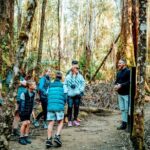
At Russell Falls, you walk among tall trees on the Tall Trees walk before reaching the waterfall centerpiece. The vibe here is classic Tasmanian: misty forest air, easy footing, and that “how can water be this powerful?” feeling once you get to the falls.
Next is Lake St Clair Park Centre, sitting by Australia’s deepest freshwater lake at the southern end of Cradle Mountain–Lake St Clair National Park. This stop is a good breather after rainforest walking. If you’re trying to keep your body from getting sore too soon, this is one of those moments where you can stroll or grab lunch and let your legs settle.
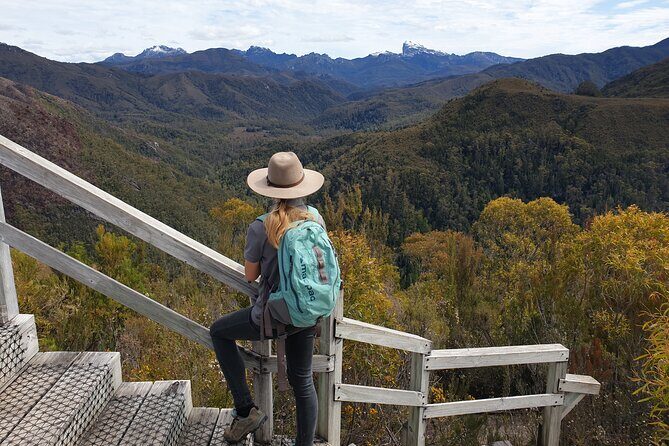
Then comes Franklin-Gordon Wild Rivers National Park in the World Heritage area. This is where you get the dramatic payoff: mountain peaks, rainforest views, and the feeling that you’re truly inside a protected wilderness. The timing works well—enough walking to feel connected, not so much that day one becomes a grind.
Finally, you pass through Queenstown, a small town with mining history and that rugged west-coast spirit. Even though it’s a quick stop, it helps break up the pure nature focus and gives the trip some variety.
Strahan, dunes, and a West Coast story: day two’s wild coasts
Day two shifts hard toward the West Coast, and that’s where Tasmania’s coastline really flexes.
You start with Strahan, a harbour-side town on the edge of the Tasmanian Wilderness World Heritage Area. It’s the kind of place where you can wander and get a sense of history without needing a checklist. If you like calm evenings and casual exploring, this is a nice setup.
The optional World Heritage Cruises on the Gordon River is the “choose your own adventure” moment. If weather and budget allow, a cruise into the temperate rainforest is a strong way to see that World Heritage landscape without having to hike every angle. If you skip it, you still get West Coast nature stops later in the day.
Then you hit the Henty Dunes. This is wide open, sandy, and wind-shaped—sand extending along the coast and dunes that get surprisingly tall. It’s one of those stops that feels different from the forests: less damp, more light, more scale.
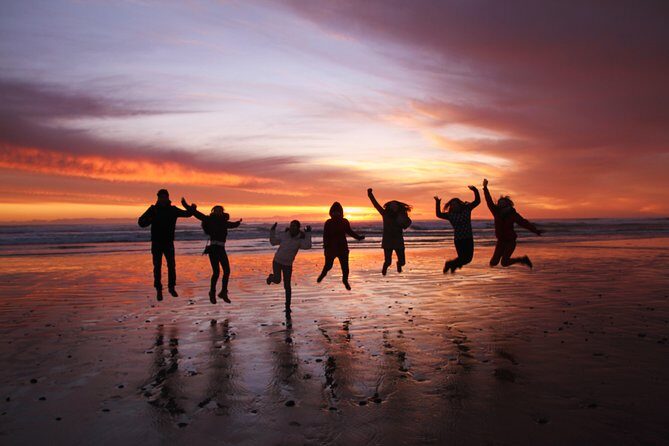
Ocean Beach follows, a long stretch of wild waves and sunsets. There’s a fun perspective here: you’re standing on land where the next landfall is in South America, over 10,000km away. Even if that fact doesn’t matter once you’re there, the scale does.
If you want something a little quirky and different, there’s also an optional stop called The Ship That Never Was, based on a real 1834 event connected to Sarah Island and the last Great Escape. It’s a nice change of pace when the day has already been full of outdoor time.
Cradle Mountain–Lake St Clair: Dove Lake vs Marion’s Lookout
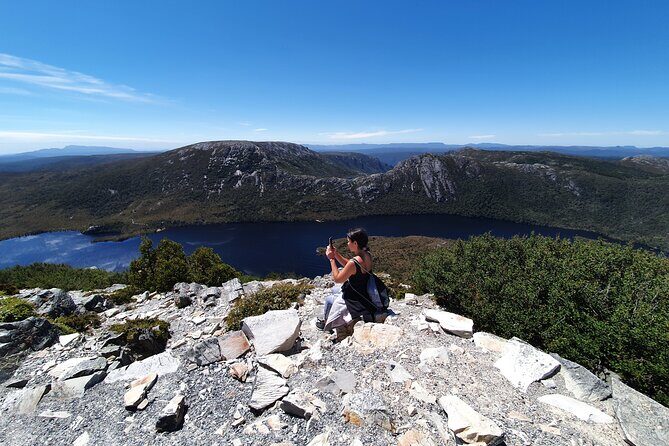
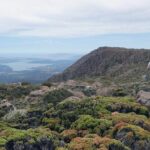
Day three is Tasmania’s big-ticket walking day. You arrive at Cradle Mountain–Lake St Clair National Park, and it’s the sort of place you understand why people plan their whole trip around it.
You get two main ways to experience it:
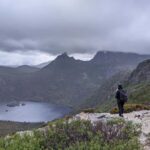
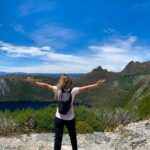
- The Dove Lake Circuit is listed as about 4 hours, and it’s the signature walk for classic Cradle views. It’s a strong choice if you want a serious hike but still want it to feel like a scenic loop rather than a climb-only challenge.
- Marion’s Lookout Walk is also around 4 hours, and it’s the harder, more vertigo-in-your-head option. If you’re willing to push a bit, the reward is the kind of overlook that makes you stop talking for a second.
There’s also a brief stop at Ronny Creek territory, where you might catch wildlife like wombats if you’re lucky. The key is your attitude: keep your eyes open and don’t rush every moment to get the perfect photo.
After the walking, you visit Sheffield, known for being quirky and creative, with history and lots of murals. This is a “reset” stop—still part of the Tasmania story, but lighter than another full hour of hiking.
If you’re worried about fitness, don’t. The format is designed for options on at least these two key hikes. Choose the trail that fits your day.
Cataract Gorge, St Helens, and the Bay of Fires: the east-coast switch
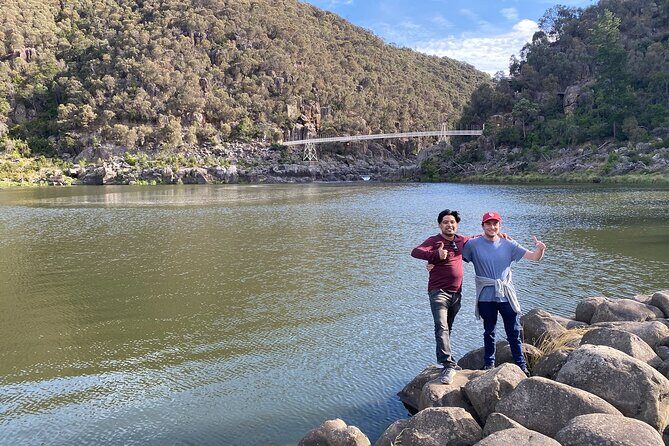
By day four, you’re in more agricultural and coastal territory—still wild, but with a different feel than the West Coast.
Cataract Gorge Reserve near Launceston is a fun break. You get walking tracks and the highlight: the world’s longest single-span chairlift. Even if you don’t ride it, the gorge gives you dramatic views without needing a long, steep hike. At about 1 hour, it’s also a good “stretch and photos” stop.
Next is St Helens, a fishing town where you can grab lunch and look at the cray boats in the harbour. This is a practical, real-world stop—more about eating and soaking up local life than hitting another postcard trail.
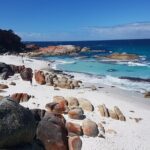
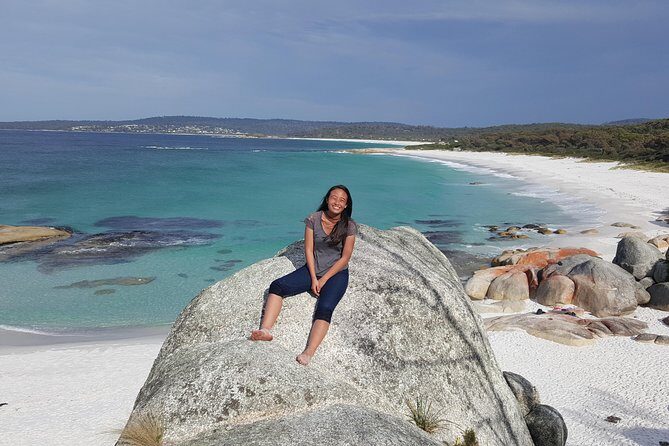
Then comes the main coastal star of the day: the Bay of Fires. This is where Tasmania earns its reputation. You’re looking at crystal-clear water, white sand beaches, and those distinctive granite boulders covered in orange lichen. The description notes that if conditions are right, it can be a swim day. Even if you don’t swim, you’ll want time just to stand there and take in the color contrast.
Bicheno finishes the day. It’s a seaside town where you can explore at your leisure, then settle in for the evening. The best use of this time is simple: slow dinner, then a walk or lookout while the light is good.
A few more Hobart tours and experiences worth a look
Freycinet National Park early: Wineglass Bay before the rush
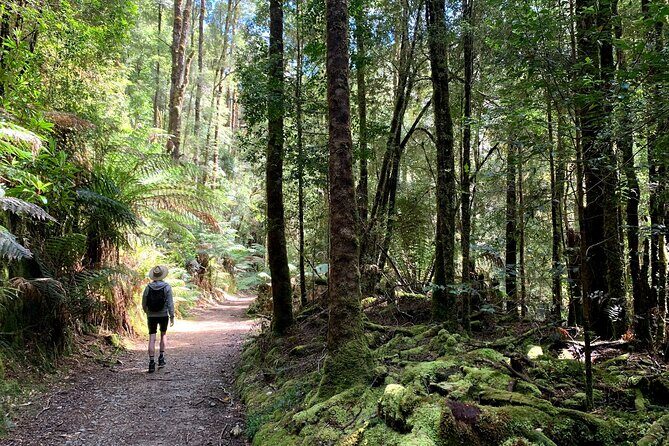
Day five is built around arrival timing. Freycinet National Park is famous, and the tour plan is designed to beat crowds by getting there early.
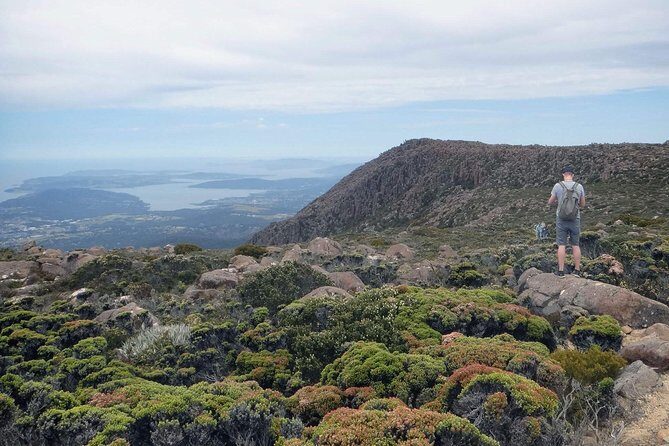
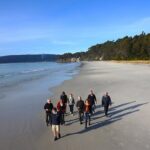
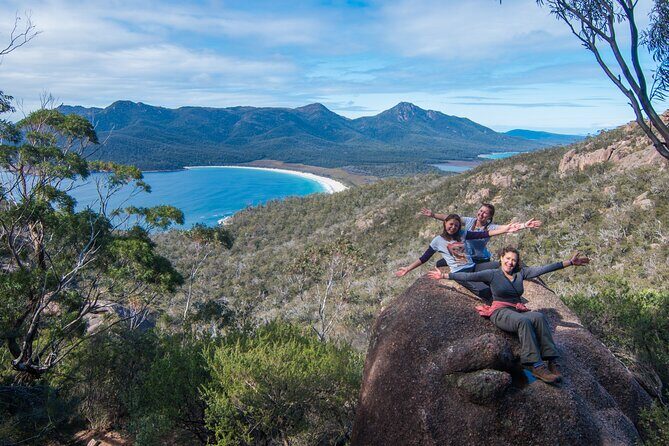
You start with a walk to the lookout over Wineglass Bay (about 5 hours total for the park visit listed). This is the big panoramic moment: the kind of view that makes you understand why people repeat their trips to the same places in different seasons.
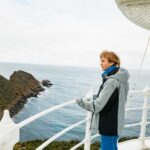
After that, you get another Wineglass Bay Lookout block (also listed around 5 hours), plus Cape Tourville Lighthouse (about 45 minutes). That lighthouse stop matters because it changes your angle—more open sea views, plus a look back toward the Hazards Mountains and Wineglass Bay area.
There’s also a short pass-through in Orford. Think of it as a quick pause, not a big day-stop.
If you’re building your packing mindset for this tour, day five is the day to treat like the big finale. Even when the schedule gives you time, you’ll still be walking and moving.
Price and logistics: does $728.58 feel like value?
At $728.58 per person for an about 5-day experience, the value is mostly about what gets included.
You’re getting:
- 4 nights accommodation
- national park entry fees
- round-trip transfers from central Hobart (with airport drop-offs on request)
- an expert guide
- an eco-certified tour approach
- a mobile ticket
That’s not just “convenience.” It’s also risk reduction. Tasmania can eat budgets quickly if you’re paying for car rental, fuel, and a stack of park and activity costs while trying to manage distances.
This tour is for you if you want a predictable package: you pay once, then you show up. It’s also a strong deal for solo travelers who don’t want to figure out where to stay each night.
The trade-off is that your pace is set by the group. If you hate tight schedules or you’re the type who wants full control of every hour, you might find the day-to-day movement a bit intense.
Comfort level: hostels, motel options, and packing for real weather
Accommodation is where the tour can surprise you—in both directions.
This tour is commonly described as hostel dormitory accommodation with a hostel-style setup, and it’s clear from the feedback that quality can vary. Some nights are described as fine for the package price, while other accounts mention basic rooms, older facilities, or limited storage and bathroom setup.
The good news: there’s often a motel option available instead of dorms, and twin-share options can exist at hostels depending on your booking choice. That’s worth considering if you’re sensitive to sleep comfort.
Also: Tasmania weather is not a theory. It’s real. If you’re going in cooler months or shoulder seasons, expect that you’ll need layers. One piece of practical advice that shows up clearly is to pack multiple sets of hiking clothes and bring swim gear if you want to take advantage of a possible Bay of Fires swim day.
On top of that, bring shoes you’re happy to hike in. You’ll do multiple multi-hour walks across different terrains.
Food, timing, and optional extras: how to plan your day without stress
Food is not fully included. The tour description says food and drinks aren’t included unless specified. That means you’ll rely on:
- breakfast patterns that may be self-catered on some hostel nights,
- supermarket stops for lunches and ingredients,
- and dinner choices near where you’re staying (or cooking if your lodging allows it).
This is where a little planning helps. If you like having control over what you eat, you’ll probably feel fine. If you expect full meals included every day, you’ll be caught off guard.
Two optional costs you should understand up front:
- World Heritage Cruises on the Gordon River (listed as not included)
- The Ship That Never Was (also not included)
There’s also mention in the schedule that you might be walking in weather or choosing between walking time and paid cruise alternatives depending on conditions. So if you’re budget-focused, you can treat the cruise as a conditional splurge.
One more practical note: keep an eye on the group pace. There’s generally enough free time built in for breaks, but you’ll want to be ready when the bus time comes. That’s when good guide leadership shows: they keep the group organized so you’re not waiting around wondering what happens next.
Best for whom: the active outdoors lover with limited time
This tour is ideal if:
- you have limited time and want a big island overview
- you’d rather walk and look than plan drives and bookings
- you’re comfortable with moderate fitness needs for multi-hour hikes
It’s also a good fit if you like meeting other people. The group mix can include solo travelers, couples, and a range of ages. That variety can make the time on stops and at shared dining moments more fun.
This tour might not suit you if:
- you dislike hostel-style lodging, or you need a very consistent room quality
- you’re not into hikes (the walking days are a big part of the experience)
- you prefer fully guided, fully catered meals rather than self-catered lunches or dinner options
Should you book the 5-Day Best of Tasmania Tour?
If you want Tasmania’s highlights without renting a car, I’d seriously consider booking. You’re paying for transport, park entry, and a structured rhythm that hits multiple iconic regions: Cradle Mountain, the West Coast coasts, the Bay of Fires, and Freycinet.
Book this if you can handle active days and you’re okay with lodging that may be basic in hostel nights. If you want more comfort, choose the motel option when it’s available and pack layers so weather won’t slow you down.
If your perfect trip is slow, flexible, and built around total control of your schedule, then this “see a lot” style may feel too fast. But if you want the practical version of Tasmania—parks, beaches, rainforest, and viewpoints stacked into five days—this is one of the cleaner ways to do it.
If you tell me your travel month and whether you want hostel or motel comfort, I can help you decide which option fits you best.
FAQ
How long is the 5-Day Best of Tasmania Tour from Hobart?
The tour runs for 5 days (approx.).
Where does the tour start and end?
It starts at YHA Hobart Central, 9 Argyle St, Hobart and ends back at the same meeting point.
What time does the tour start?
Start time is 7:00am.
What’s included in the price?
The package includes four nights accommodation, national park entry fees, pick-ups and drop-offs at selected Hobart CBD locations (and airport drop-offs on request), an expert guide, and the tour is described as an advanced eco-certified experience.
What transportation is included?
Round-trip transfers from selected central Hobart locations are included.
Are meals included?
Food and drinks are not included, unless specified.
Are national park entry fees included?
Yes, national park entry fees are included.
Are there optional activities?
Yes. Some activities are listed as not included, including the World Heritage Cruises on the Gordon River and The Ship That Never Was.
What level of fitness do I need?
The tour notes that a moderate level of fitness is beneficial since it’s active and includes hikes.
How many people are on the tour?
The tour has a maximum of 24 travelers.